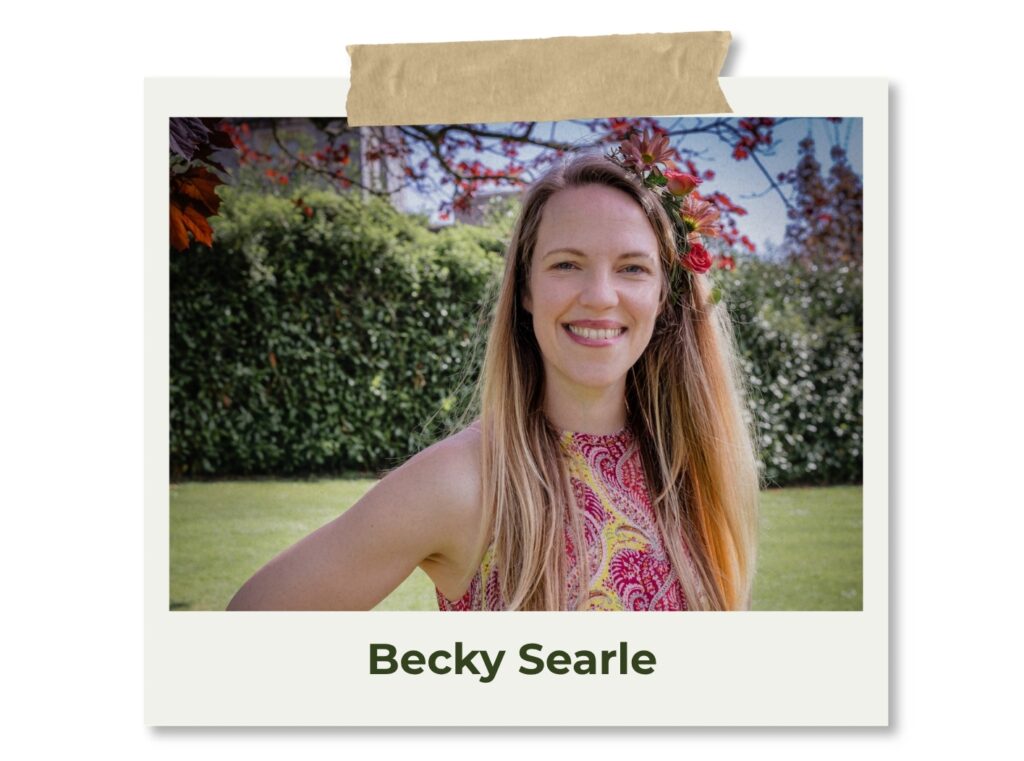
We’re delighted to welcome festival favourite Becky Searle back to Toby’s Garden Festival in 2027! An ecologist, gardener and author, Becky has been inspiring our visitors for several years with her passion for sustainable gardening and her fascinating knowledge of the natural world. Ahead of her return to the festival, we caught up with Becky to discover more about her gardening journey, explore the science beneath our feet and hear her advice on everything from creating a wildlife-friendly garden to saving our own seeds. Along the way, she challenges some common gardening myths and shares plenty of practical tips to help us all get more from our gardens by working with nature.
For those who haven’t come across you before, can you tell us a little about yourself and how your love of gardening began?
I started out as an ecologist, and saw my garden like a laboratory where I could play with plants and observe animals. I loved the sustainable lifestyle and feeling of wellbeing that came with growing my own food and flowers. So I tried to align my two passions, and I still try to use my garden as best I can for ecology.
You’re passionate about the science behind gardening. What first sparked your fascination with what goes on beneath the soil?
I started university in 2005, studying ecology and we didn’t learn anything about the soil. When I started gardening, and doing my own research into the soil, I quickly realised what an oversight that was, and just how fascinating soil is. Studying soil is really where my two interests of gardening and ecology meet in the most interesting way.
What’s one thing you wish every gardener knew about their soil?
You can’t change the soil you have, you can only improve it. It’s best to work with your soil, rather than trying to change it.
You’ve transformed your own new-build garden from a blank canvas into a thriving haven for wildlife and written the book Grow a New Garden. What were the biggest changes you made, and what advice would you give our readers who’d love to encourage more wildlife into their own gardens?
The biggest challenge for me was growing a lawn. I’m not a fan of lawns, but with a young family and a dog, it is quite an important feature, but the heavy clay and heaps of shade in my garden made for a huge challenge. We had leatherjackets, cutworms and regular flooding to contend with. The thing that really made the difference was adding organic matter. The soil now doesn’t flood, water drains away quickly and the grass grows well. I also compromised my allowing some areas to grow long, and planting daisies, trefoil and clover in the lawn to give it some value for nature. I recommend that people take this approach to all areas of their garden; ask what value it has for you, and what value it has for nature, and try to make it work for both.
With so much gardening advice out there, is there a common gardening myth you’d love to bust once and for all?
Digging! Digging doesn’t improve soil fertility – it causes a quick release of nutrients which then tails off leaving your soil less fertile than before. Soil fertility is dictated by the type of soil, and what lives in it. The organisms that live in the soil are perfectly adapted to life underground, so digging over our beds can have profound effects on their ecosystem and lifecycles. Doing this regulalry gradually degrades your soil.
What’s your favourite thing to grow in your own garden, and is there anything you’re particularly excited about growing in 2027?
I love growing my own food and I’m always looking for ways to make my garden and allotment more productive. Next year I’m excited to be adding some more resilience to my garden and allotment in the form of more water catchment and storage, automatic watering systems and plenty of mulch. I’ve only been on the site for 3 years, so there is still a long way to go to improve the soil and make the land more productive.
You’re a passionate advocate for seed saving and have written The Seed Collector’s Kit. What do you love most about collecting your own seeds, and which plants would you recommend beginners start with?
I love that collecting your own seeds turns a seed packet from an expense into an investment. You get so much more back than you would get from one seed, and by choosing to save seeds from the best, healthiest pants you can selectively breen plants specifically adapted for your own garden. As a beginner, start by letting a few things go to seed. Brassicas, lettuce, spinach, beans and peas are all really straightforward. Just wait for the seeds to fully mature, then pop them in an envelope. Some you can even just put straight back into the ground.
What do you enjoy most about meeting fellow gardeners at events like Toby’s Garden Festival?
I love sharing ideas, inspiration and general energy with other gardeners, especially at the beginning of the growing season. Everyone brings something that they’re excited about, or something they want to learn or share, and it becomes this huge melting pot of creativity and excitement.
And finally, if you could give our festival visitors just one piece of gardening advice to take home and put into practice, what would it be?
Mulch! Mulch helps lock in moisture, helps water filter into the soil, and improves drainage. It helps feed the life in the soil and in turn your plants and helps bolster plant defences. So if you’re going to dig in some organic matter this winter – try just laying it on the surface of the soil instead.
Come and See Becky at Toby’s Garden Festival 2027!
Feeling inspired? Join Becky and our fantastic line-up of gardening experts for a wonderful day filled with fresh ideas, practical advice and gardening inspiration.
With Early Bird tickets available for just £17.75 per person, there’s no better time to book – and with Christmas just around the corner, why not give the gift of a great day out?
Book Your 2027 Tickets Today!